DPO Pregnancy Calculator
Find out exactly what DPO you are today, when implantation can happen, how high hCG should be, the best day to test, and your due date if you are pregnant.
Fine-tune (optional)
Defaults suit most people: a 14-day luteal phase and a standard 25 mIU/mL test. The luteal phase sets your period due date and, in last-period mode, your estimated ovulation day.


| DPO | Date | What's happening | hCG if pregnant* | Test? |
|---|
*Approximate serum hCG in mIU/mL for a typical pregnancy with implantation around 9 DPO. Real values vary widely; the 48-hour trend matters more than any single number.

What DPO Means and How to Count It
DPO stands for days past ovulation. It is the clock almost everyone uses during the two-week wait, because every important early-pregnancy event (fertilisation, implantation, the first rise in hCG, the first possible positive test) is timed from ovulation, not from your last period.
Counting is simple once you fix the starting point: ovulation day is 0 DPO, the next day is 1 DPO, and so on. If you track with LH (ovulation) tests, ovulation usually happens 24 to 36 hours after the first positive, so the day after your peak LH test is a sensible 0 DPO. If you chart basal body temperature, 0 DPO is the last low-temperature day before the sustained rise. Some apps count the day after ovulation as 0 DPO instead, which is why your number can differ by one day between tools.
If you do not track ovulation, switch the calculator to Use my last period. It estimates ovulation as your cycle length minus your luteal phase length, the standard calendar method. That estimate can be off by several days, so if your DPO matters (for example, deciding when to test), our ovulation and period calculator will help you pin the fertile window down next cycle.
What Happens at Each DPO
The two-week wait is not one long nothing. A lot happens, in a fairly predictable order:
| DPO | What's happening |
|---|---|
| 0 DPO | The egg is released and survives 12 to 24 hours. Fertilisation, if it happens, is usually within this window. |
| 1–3 DPO | The fertilised egg (zygote) divides as it travels down the fallopian tube. Nothing is detectable; progesterone starts rising from the corpus luteum. |
| 4–5 DPO | The embryo, now a blastocyst, reaches the uterus. Progesterone is high, which is why PMS-like symptoms appear whether or not you are pregnant. |
| 6–7 DPO | Implantation window opens. The blastocyst hatches from its shell and can begin attaching to the uterine lining. A small share of pregnancies implant this early. |
| 8–10 DPO | Peak implantation. Most pregnancies implant here. hCG production starts the moment implantation completes, but levels are still far below what a home test can detect. Light spotting at this stage is sometimes implantation bleeding. |
| 11–12 DPO | hCG is doubling roughly every day. A sensitive early-result test may show a faint line. Negatives still mean little. |
| 13–14 DPO | Standard tests become reliable. On a 14-day luteal phase, 14 DPO is the day your period is due, and a positive is about 4 weeks pregnant. |
| 15+ DPO | Missed period. Nearly all pregnancies are detectable now. A negative with no period deserves a retest in 48 hours, then a blood test. |
Late implantation (11 to 12 DPO) is normal but shifts everything to the right by two or three days, which explains most "negative at 12 DPO, positive at 15 DPO" stories. See our guide to a negative pregnancy test weeks after implantation if the gap is much longer than that.
hCG Levels by DPO
hCG starts at zero, because nothing is produced until the embryo implants. From there it roughly doubles every 24 to 48 hours. Typical serum ranges for a pregnancy that implanted around 9 DPO look like this:
| DPO | Typical hCG (mIU/mL) | What a home test sees |
|---|---|---|
| 8 DPO | under 5 | Nothing. Even a 10 mIU/mL test is below threshold. |
| 10 DPO | 5 – 25 | Possible faint line on a 10 mIU/mL test; usually negative on 25 mIU/mL. |
| 12 DPO | 20 – 100 | Standard test about 70% likely to be positive. |
| 14 DPO | 50 – 300 | Standard test about 90% likely to be positive; lines usually clear. |
| 16 DPO | 120 – 700 | Nearly all pregnancies detected. Lines dark. |
| 21 DPO | 500 – 3,000+ | Any test positive. Around 5 weeks pregnant. |
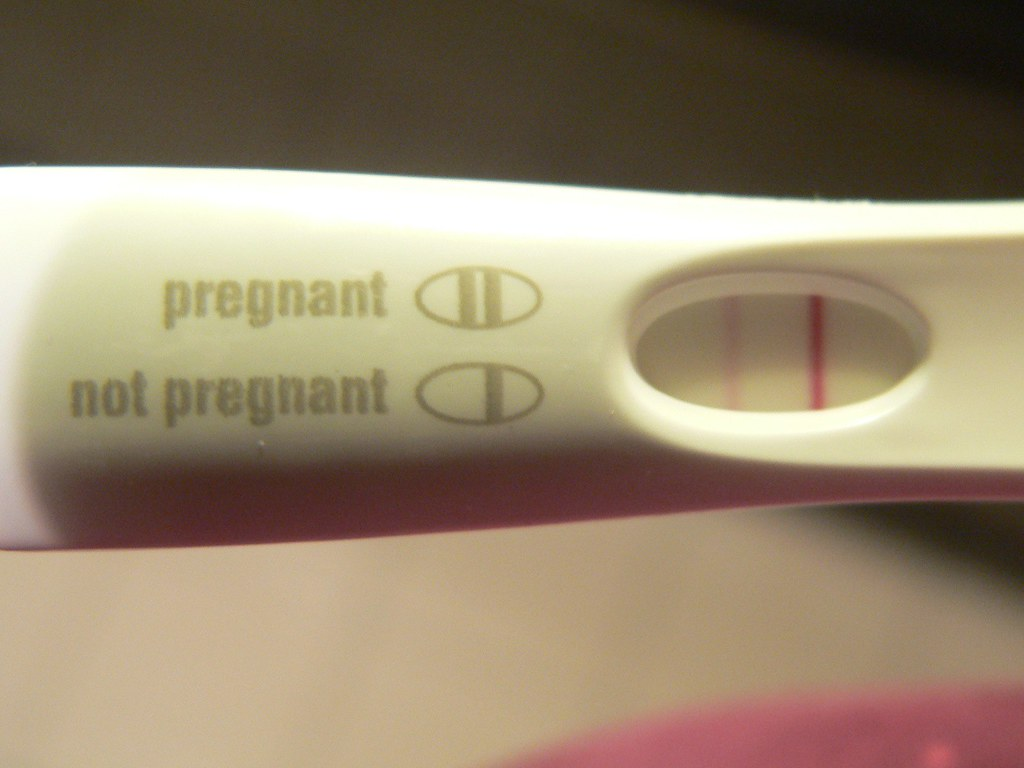
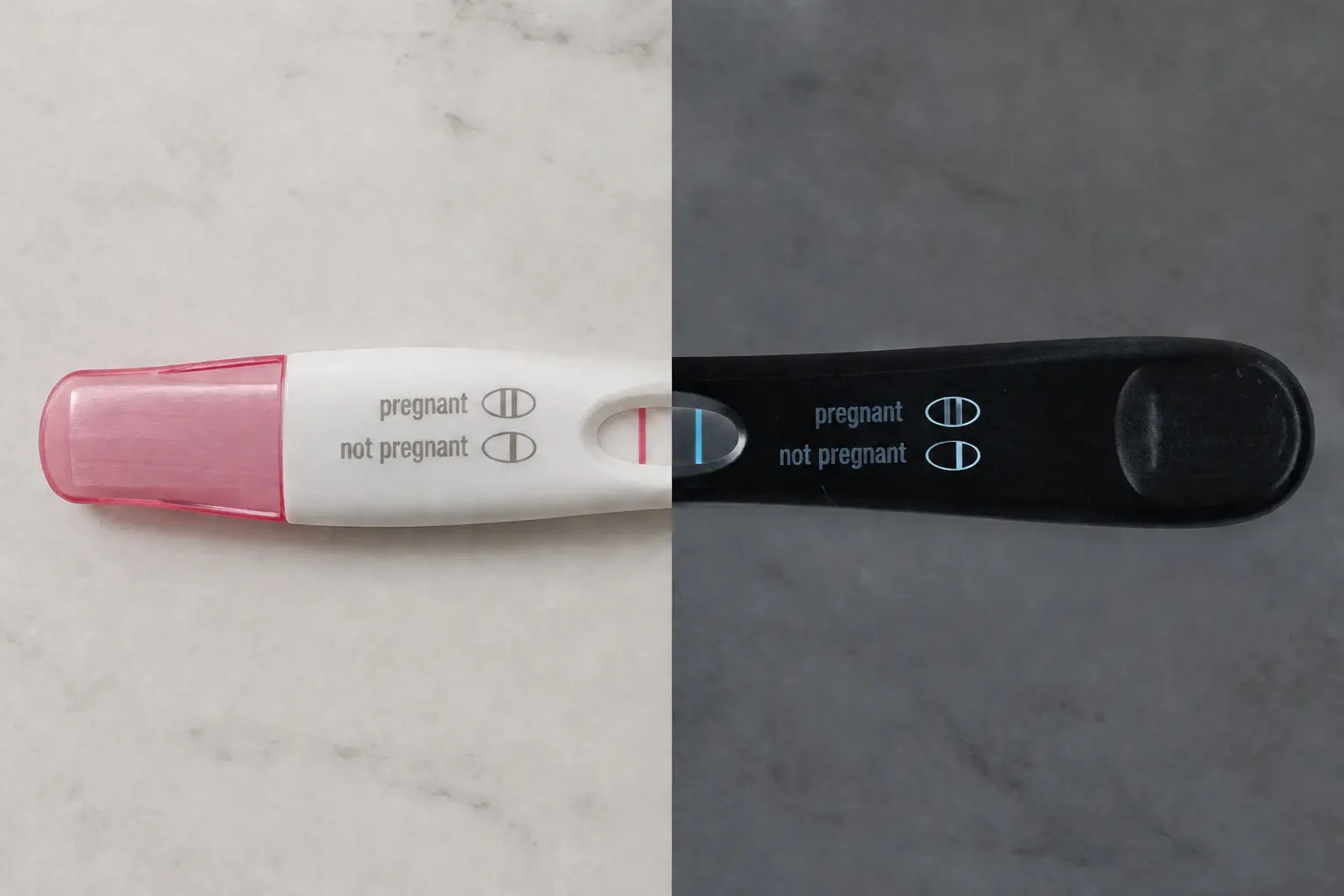
Urine hCG lags serum by a little and is diluted by whatever you drank, which is why first morning urine matters most between 10 and 13 DPO. A line that is faint at 11 DPO is expected; what you want to see is that it darkens over the next two to three days. If you cannot tell whether there is a line at all, our pregnancy test inverter flips the colours to make a faint line stand out, and our AI pregnancy test reader will analyse a photo of the strip for you.
DPO vs Weeks Pregnant vs Cycle Day
Three different clocks describe the same moment, and mixing them up causes a lot of confusion:
- Cycle day (CD) counts from the first day of your period. Ovulation is around CD 14 on a 28-day cycle, but can be CD 10 or CD 20 in other cycles.
- DPO counts from ovulation. It is the clock that matters for implantation and testing.
- Weeks pregnant (gestational age) is dated from the last menstrual period, which is roughly two weeks before ovulation. So weeks pregnant = DPO + 14 days. At 14 DPO you are 4 weeks pregnant; at 28 DPO you are 6 weeks.
Because gestational age is really ovulation plus two weeks, this calculator derives it and your due date from your ovulation date rather than your last period. That keeps it accurate for long and short cycles, where the standard last-period method can be off by a week or more. The due date is ovulation plus 266 days (38 weeks).
When to Take a Pregnancy Test by DPO
The short version: 10 DPO is the earliest a sensitive test has a realistic chance, 12 DPO is where a standard test passes about 70%, and 14 DPO (a missed period on a 14-day luteal phase) is where most people should test for a dependable answer. Before 9 DPO, a negative tells you nothing, because most pregnancies have not implanted yet.
This page gives you the dates for those milestones. For the full day-by-day odds, adjusted for your specific test's sensitivity and the time of day you test, use our when can I take a pregnancy test calculator. If you are testing early and get a faint result, the very faint line guide and the evap line vs faint positive comparison will help you read it. And if you test late in the day, remember that a negative at night can turn positive in the morning.
Symptoms by DPO: What Is Real and What Is Progesterone
Most of what people feel in the two-week wait is progesterone, which rises after every ovulation whether or not an egg was fertilised. Sore breasts, bloating, fatigue, mild cramps, and mood swings from 4 to 12 DPO are normal luteal-phase symptoms. True pregnancy symptoms are driven by hCG, which does not exist before implantation and does not reach meaningful levels until about 12 DPO at the earliest. Light spotting around 8 to 10 DPO can be implantation bleeding, but it is absent in most pregnancies and present in some non-pregnant cycles, so it is not a reliable sign either way. The honest answer is that a test, timed right, is the only thing that tells you.
If you are still in the trying-to-conceive stage, our guides on vitamin D and fertility, fertility teas, and getting pregnant with endometriosis cover the run-up to ovulation.
Frequently Asked Questions
How do I calculate my DPO?
Count the days from your ovulation date to today, with ovulation day as 0 DPO. If you only know your last period, estimate ovulation as cycle length minus luteal phase (usually 14 days) and count from there. This calculator does both automatically, and lets you check any other date too.
Is ovulation day 0 DPO or 1 DPO?
Ovulation day is 0 DPO and the first full day after it is 1 DPO. Some apps start counting at 1 on ovulation day, which is why your DPO can differ by one between tools. This calculator uses the 0 DPO convention, which is the most common.
At what DPO does implantation happen?
Between 6 and 12 DPO in nearly all pregnancies, most often at 8 to 10 DPO. hCG production only starts after implantation, so tests before about 9 DPO are almost always negative even when you are pregnant.
At what DPO can I get a positive pregnancy test?
A sensitive 10 mIU/mL test can show a faint positive from about 9–10 DPO in some pregnancies. A standard 25 mIU/mL test is around 70% accurate at 12 DPO and about 95% by 16 DPO. Testing at 14 DPO, the day of a missed period on a 14-day luteal phase, is a reliable choice for most people.
How do I convert DPO to weeks pregnant?
Add 14 days. Pregnancy is dated from the last period, about two weeks before ovulation, so 14 DPO is 4 weeks pregnant and 21 DPO is 5 weeks. The calculator shows your gestational age for whichever date you check.
What are normal hCG levels by DPO?
Usually undetectable before 8–9 DPO, around 5–25 mIU/mL at 10 DPO, roughly 20–100 at 12 DPO, and about 50–300 at 14 DPO. The ranges are wide because implantation day varies. The 48-hour trend matters far more than any single number.
How does this DPO calculator work out my due date?
If you are pregnant, your estimated due date is 266 days (38 weeks) after ovulation. That is the same as 40 weeks from the last period on a textbook cycle, but counted from ovulation, so it stays accurate if your cycle is longer or shorter than 28 days.