

Where Can I Go to See If I'm Pregnant? Every Option Explained
Your Options for Finding Out If You're Pregnant
If you're asking where you can go to see if you're pregnant, the good news is that you have more options than ever — many of them fast, private, and affordable. Whether you want to confirm at home within minutes or get a definitive clinical answer, the right choice depends on your circumstances, timeline, and comfort level.
Pregnancy is confirmed by detecting human chorionic gonadotropin (hCG), a hormone your body produces shortly after a fertilized egg implants in the uterus. This hormone appears in both urine and blood, which is why both home tests and lab tests are effective tools for pregnancy detection.
Below is a complete guide to every place and method you can use to find out if you're pregnant, along with what to expect from each option.
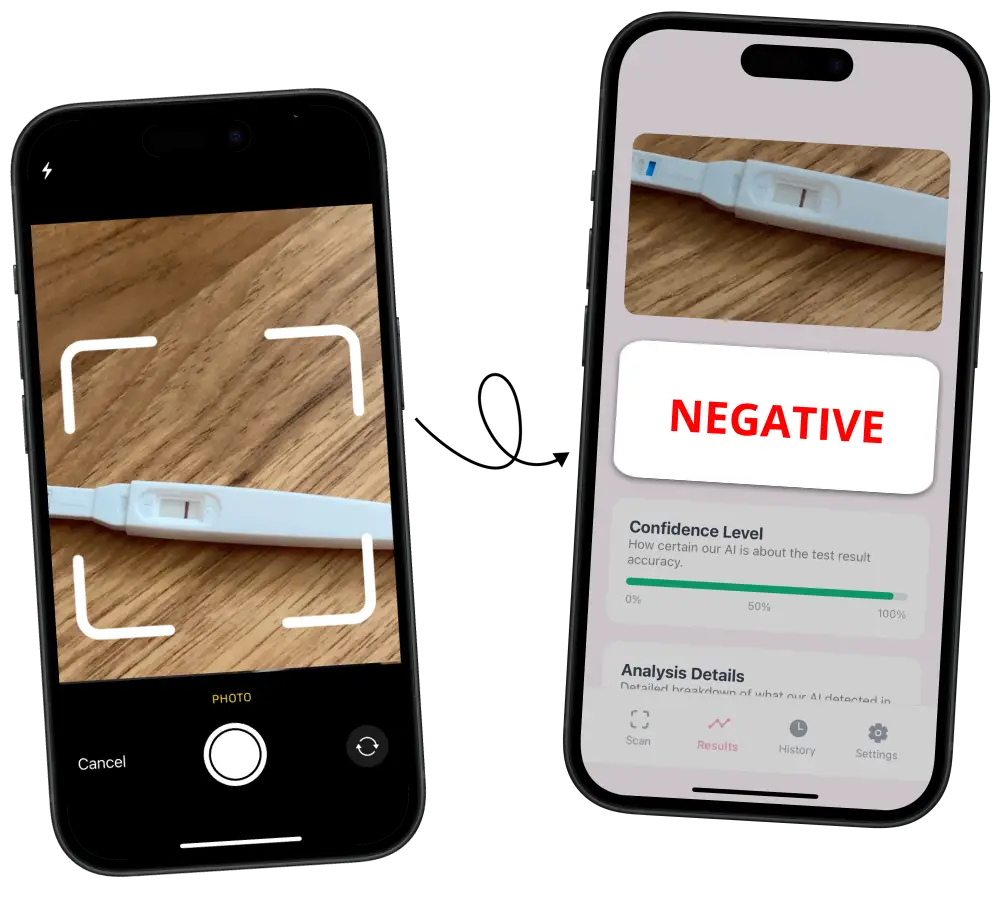
Let AI Check Your Pregnancy Test
Just take a photo and get result

Option 1: Take a Home Pregnancy Test
The fastest and most private way to find out if you are pregnant is with an at-home pregnancy test. These tests are available over the counter at pharmacies, grocery stores, and even dollar stores, and most deliver results in under five minutes.
Home pregnancy tests work by detecting hCG in your urine. They are most accurate when taken on or after the first day of a missed period, though some early-result tests can detect pregnancy up to six days before a missed period.
Here is what to keep in mind when testing at home:
- Use first morning urine for the most concentrated hCG levels
- Check the test sensitivity — tests detecting 10 mIU/ml are more accurate earlier than those detecting 25 mIU/ml
- Read results within the valid time window listed in the instructions (usually 3–10 minutes)
- A faint line is still a positive result
- Expired or incorrectly stored tests may give inaccurate results
If you are unsure whether your result line is truly positive or negative, an AI-powered pregnancy test scanner app can analyze your test photo and help you interpret the result with greater confidence.
Option 2: Visit Your Primary Care Doctor or OB-GYN
Your primary care physician or OB-GYN is one of the most comprehensive places to go for pregnancy confirmation. They can administer a urine pregnancy test in the office, or order a quantitative blood hCG test for a more precise result.
A blood test from your doctor can:
- Detect pregnancy earlier than urine tests — sometimes as soon as 6–8 days after ovulation
- Measure the exact hCG level in your blood
- Track whether hCG is rising appropriately over serial draws, indicating a healthy pregnancy
- Rule out ectopic pregnancy or other complications when symptoms are present
If a pregnancy is confirmed, your doctor can also begin prenatal care planning, answer questions about your health history, and arrange an early ultrasound if indicated. This is the most thorough route for medically supervised confirmation.
Option 3: Go to a Reproductive Health Clinic
Reproductive health clinics such as Planned Parenthood offer confidential pregnancy testing and counseling, often at low or no cost depending on your income and location. These clinics are designed to serve people who may not have a regular doctor or insurance coverage.
At a reproductive health clinic, you can typically expect:
- A free or low-cost urine pregnancy test
- Non-judgmental counseling about your options, whatever they may be
- Referrals for prenatal care, abortion services, or adoption resources depending on your needs
- Information about sexually transmitted infections and contraception if relevant
You do not need insurance or a referral to visit most reproductive health clinics. Many accept walk-in appointments, and same-day testing is often available. To find a clinic near you, visit Planned Parenthood's clinic locator.
Option 4: Visit a Pregnancy Resource Center
Pregnancy resource centers (sometimes called pregnancy care centers or crisis pregnancy centers) are community organizations that offer free pregnancy tests and support services. They are often run by faith-based or non-profit groups and provide testing at no charge.
Services commonly available at pregnancy resource centers include:
- Free urine pregnancy tests, sometimes followed by a free limited ultrasound
- Peer counseling and emotional support
- Practical resources such as baby supplies, clothing, and referrals to local assistance programs
It is worth noting that pregnancy resource centers typically support continuing a pregnancy and may not provide referrals for abortion services. If you want balanced medical guidance across all options, a reproductive health clinic or licensed medical provider may be a better fit.
To find a pregnancy resource center near you, you can search through resources like Option Line, which maintains a national directory of centers offering free testing and support.
Option 5: Urgent Care or Walk-In Clinic
If your regular doctor is unavailable and you need quick answers, urgent care centers and walk-in clinics can perform pregnancy tests. Most are equipped to conduct both urine pregnancy tests on-site and to order blood tests through a local lab.
This option is particularly useful if you have concerning symptoms alongside a possible pregnancy — such as pelvic pain, heavy bleeding, or dizziness — that may require prompt evaluation for conditions like ectopic pregnancy.
Keep in mind that urgent care visits typically involve a consultation fee and may require insurance or out-of-pocket payment. However, they offer the advantage of same-day service without a scheduled appointment.
Let AI Check Your Pregnancy Test
Just take a photo and get result
Option 6: Community Health Center or Federally Qualified Health Center (FQHC)
Community health centers and Federally Qualified Health Centers (FQHCs) provide comprehensive healthcare services on a sliding-scale fee basis, meaning the cost is adjusted based on your income. For many people, this results in free or very low-cost pregnancy testing and prenatal care.
FQHCs are federally funded and required to serve all patients regardless of ability to pay or immigration status. They offer:
- Urine and blood pregnancy tests
- OB-GYN and midwifery services on-site or through referral
- Comprehensive prenatal care if pregnancy is confirmed
- Access to social support services and assistance programs
You can find a community health center near you through the HRSA Health Center Finder.
Option 7: Emergency Room (for Urgent Situations Only)
The emergency room is not typically the right place to go simply to find out if you are pregnant. Emergency departments are designed for life-threatening or urgent medical situations, and the cost of an ER visit is significantly higher than any other option on this list.
However, you should go to the emergency room if you suspect pregnancy and are experiencing:
- Severe one-sided pelvic or abdominal pain (possible ectopic pregnancy)
- Heavy vaginal bleeding
- Dizziness, fainting, or shoulder tip pain
- Signs of miscarriage or pregnancy complication
In urgent situations, do not delay seeking emergency care due to concerns about cost or access. Ectopic pregnancies in particular are life-threatening emergencies that require immediate treatment.
How to Choose the Right Option for You
Not sure which route to take? Here is a quick guide based on your situation:
- Want immediate, private results: Use a home pregnancy test with an AI scanner app to confirm the reading
- Need free testing: Visit a reproductive health clinic or pregnancy resource center
- Want the most accurate clinical confirmation: See your OB-GYN or primary care doctor for a blood hCG test
- Uninsured or underinsured: Go to a community health center or FQHC for sliding-scale care
- No appointment available and need answers today: Try an urgent care walk-in clinic
- Experiencing pain, bleeding, or alarming symptoms: Go to the emergency room immediately
What Happens During a Clinical Pregnancy Test?
If you visit a clinic, doctor's office, or health center to confirm pregnancy, the process is straightforward and typically takes less than an hour including any waiting time. Here is what to expect:
Urine Pregnancy Test at a Clinic
A clinical urine test works exactly like a home test but is administered by a healthcare provider using a lab-grade strip. You will be asked to provide a urine sample in a cup, which is then tested for hCG. Results are usually available within 5–10 minutes.
Blood hCG Test (Quantitative)
A blood draw is taken from your arm, and the sample is sent to a laboratory. A quantitative blood hCG test measures the precise concentration of hCG in your bloodstream and can detect pregnancy earlier and more reliably than urine tests. Results may take a few hours to one business day depending on the lab.
Ultrasound Confirmation
In some cases — particularly if you are further along or if there are concerns about the location or viability of the pregnancy — your provider may recommend an early ultrasound. An ultrasound can confirm the gestational age, detect a heartbeat, and rule out ectopic implantation.
How Soon Can You Get a Reliable Result?
The timing of your test matters significantly. Here is a general guide to when each method becomes reliable:
- Blood hCG test: As early as 6–8 days after ovulation (before a missed period)
- Sensitive home urine test (10 mIU/ml): Up to 5–6 days before a missed period
- Standard home urine test (25 mIU/ml): On or after the first day of a missed period
- Clinical urine test: Similar to a standard home test in most cases
Testing too early increases the risk of a false negative result, even if you are pregnant, simply because hCG has not yet reached detectable levels. If your first test is negative but your period does not arrive, retest in 48–72 hours or visit a healthcare provider for a blood test.
Does Confirming Pregnancy Cost Money?
The cost of finding out whether you are pregnant varies widely depending on the method you choose:
- Home pregnancy test: $1–$20 at pharmacies or dollar stores
- Reproductive health clinic (e.g., Planned Parenthood): Often free or low-cost based on income
- Pregnancy resource center: Typically free
- Community health center / FQHC: Sliding-scale fee, potentially free
- Primary care or OB-GYN visit: Varies; usually covered by insurance with a copay
- Urgent care: $75–$200+ without insurance depending on location
- Emergency room: $500–$3,000+ — avoid unless medically necessary
If cost is a concern, start with a home test and then visit a free clinic for confirmation. Most people do not need to pay out of pocket to confirm a pregnancy if they know where to look.
Frequently Asked Questions
Can I find out if I'm pregnant without going anywhere?
Yes. A home pregnancy test is the easiest way to check without leaving the house. You can purchase one at a pharmacy or supermarket, and results are available in minutes. If you want additional confidence in reading the result, use an AI pregnancy test scanner app to analyze your test photo — here's how pregnancy test scanners work and how to photograph your test.
Is there anywhere I can get a free pregnancy test?
Yes. Planned Parenthood clinics, pregnancy resource centers, and community health centers commonly offer free pregnancy tests. Dollar stores also sell home tests for as little as $1. You do not need insurance or identification to access free testing at most community clinics.
How soon after unprotected sex can I take a pregnancy test?
Home tests are most reliable on or after the first day of a missed period, which is typically about 14 days after ovulation. Testing too soon risks a false negative because hCG levels may not yet be high enough to detect. A blood test can provide reliable results as early as 6–8 days after ovulation.
Can urgent care confirm a pregnancy?
Yes. Most urgent care centers can administer a urine pregnancy test and order a blood hCG test if needed. They can also evaluate you for ectopic pregnancy symptoms or other urgent concerns. However, they are not the best choice for routine pregnancy confirmation due to cost.
What if my home test is unclear?
If your result line is faint or ambiguous, retest with first morning urine using a fresh test, or visit a clinic for a clinical confirmation. You can also use an AI-powered pregnancy test scanner to help interpret whether a faint line is truly positive.
Do I need an appointment to get a pregnancy test at a clinic?
Many clinics accept walk-in patients for pregnancy testing, including Planned Parenthood and urgent care centers. However, calling ahead is always recommended, as wait times and availability vary by location and day of the week.
Conclusion: You Have More Options Than You Think
If you are wondering where you can go to see if you are pregnant, the answer is: almost anywhere that is convenient for you. From a $1 dollar store test to a free clinic visit to a blood test at your doctor's office, there is an option to suit every situation, budget, and comfort level.
For most people, starting with a home pregnancy test is the fastest and most practical first step. If the result is unclear or you need further confirmation, follow up with a clinical urine or blood test at a reproductive health clinic, community health center, or your own healthcare provider.
Whatever you are feeling right now — whether it is excitement, uncertainty, or worry — remember that support is available. Reaching out to a healthcare provider early gives you access to the best information and care for whatever comes next.
Let AI Check Your Pregnancy Test
Just take a photo and get result