When Can I Take a Pregnancy Test?
Get your earliest reliable test date, plus the odds of a positive result for every single day past ovulation, adjusted for your test's sensitivity.
Fine-tune (optional)
Defaults suit most people: a standard 25 mIU/mL test, first morning urine, and a 14-day luteal phase.


| DPO | Date | Chance of a positive | Odds | Verdict |
|---|
Why Test Timing Is Measured in DPO, Not Cycle Days
Home pregnancy tests look for hCG, a hormone that only starts being produced after a fertilised egg implants in the uterine lining. Implantation happens 6 to 12 days after ovulation, with day 8 to 10 being by far the most common. That is why days past ovulation (DPO) is the right clock for test timing, because counting from your last period tells you nothing about when hCG actually started rising.
Once implantation occurs, hCG roughly doubles every 24 to 48 hours. It usually takes another 2 to 4 days after implantation before urine levels cross the detection threshold of a home test. Stack those two stages together and you get the curve shown above: almost nothing before 9 DPO, a steep climb between 10 and 14 DPO, and near-certainty by 16 to 17 DPO.
What Test Sensitivity Actually Changes
The number printed on the box (10, 20, 25, or 50 mIU/mL) is the lowest hCG concentration the test can pick up. Because early hCG doubles roughly every day, each halving of that threshold buys you about one extra day of early detection:
- 10 mIU/mL: "early result" tests. Detect roughly 1 to 2 days earlier than a standard test, which is where "6 days before your missed period" marketing comes from.
- 20–25 mIU/mL: the standard for most drugstore tests, tuned to be reliable from the day of your missed period.
- 50 mIU/mL: cheaper or older strips. Accurate, but roughly a day or two later than a standard test.
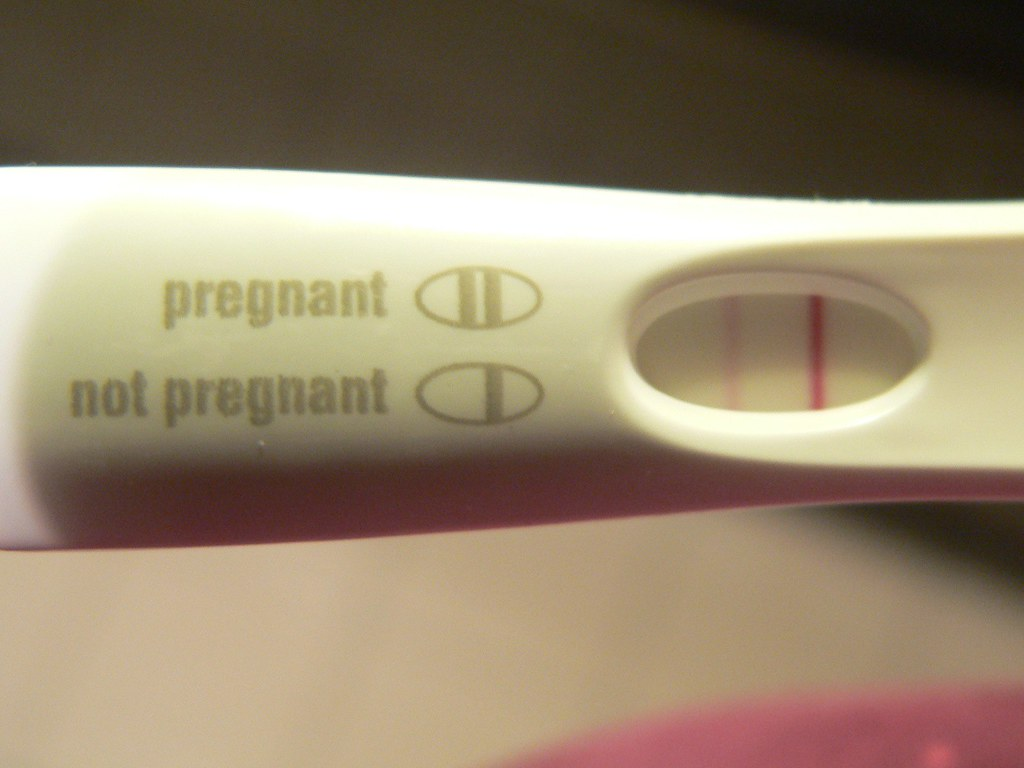
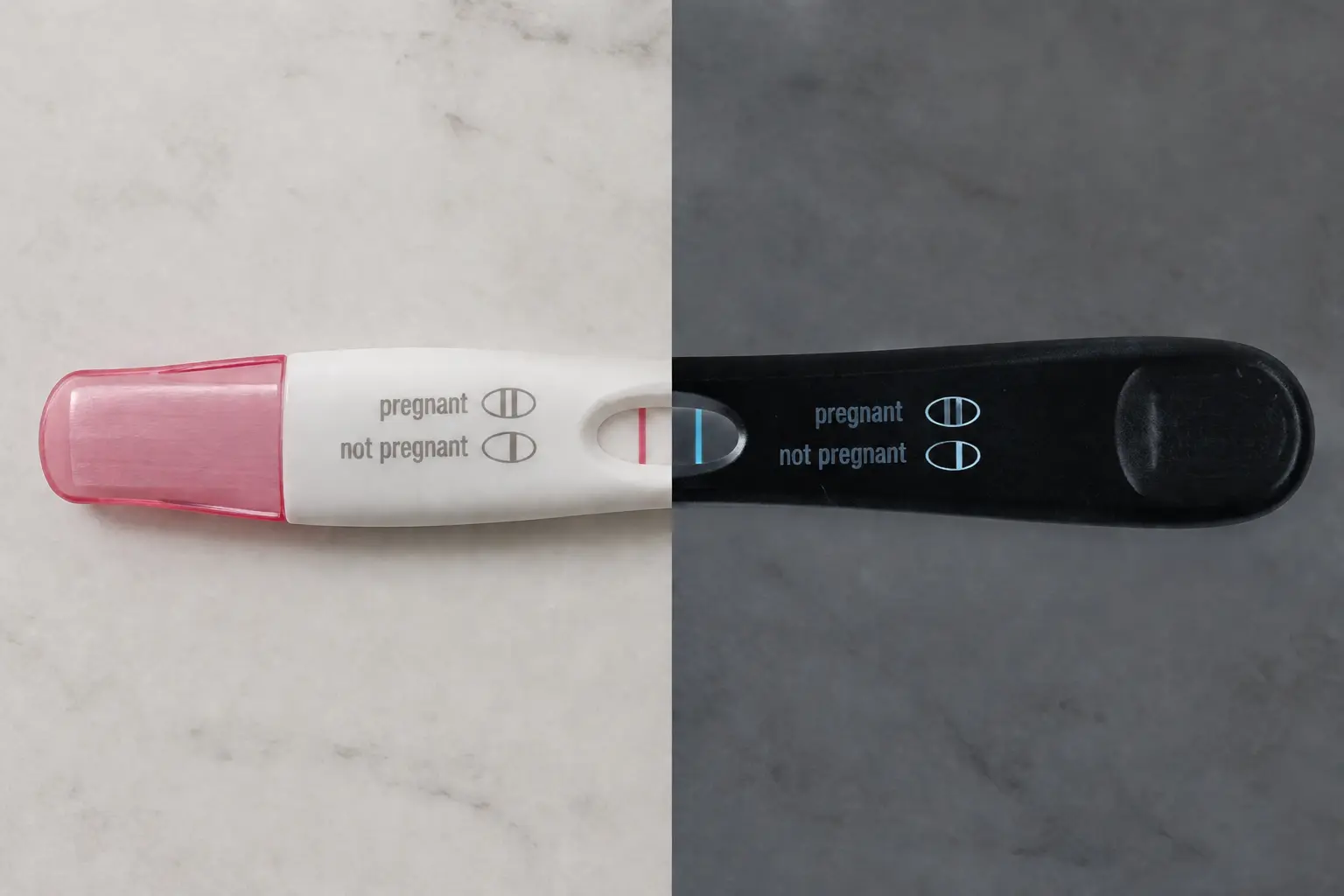
Sensitivity cuts both ways. A very sensitive test used very early is also the most likely to give you a barely visible faint line that is hard to call with the naked eye. If that happens, our pregnancy test inverter flips the colours so a faint line stands out, and the Walgreens early-result faint line guide covers what those results usually mean. If you would rather not judge it by eye, our AI pregnancy test reader analyses a photo of the test for you.
Morning vs Evening Testing
Urine concentrates overnight, so first morning urine typically carries the highest hCG per millilitre of the day. Later in the day, fluids dilute your urine and can push a borderline result below the detection threshold. That is the classic reason for a negative test at night followed by a positive one in the morning. This calculator models that as roughly a one-day setback in your accuracy curve.
By the time you are past your missed period, hCG is usually high enough that time of day stops mattering much. It matters most in the 10 to 13 DPO window, exactly when most people are tempted to test.
What a Negative Result Means at Each Stage
- Before 9 DPO: a negative tells you essentially nothing. Most pregnancies have not implanted yet.
- 10 to 12 DPO: a negative is weak evidence. Roughly a third to a half of pregnancies are still undetectable here.
- 13 to 15 DPO: a negative is meaningful, but late implantation still accounts for a slice of false negatives.
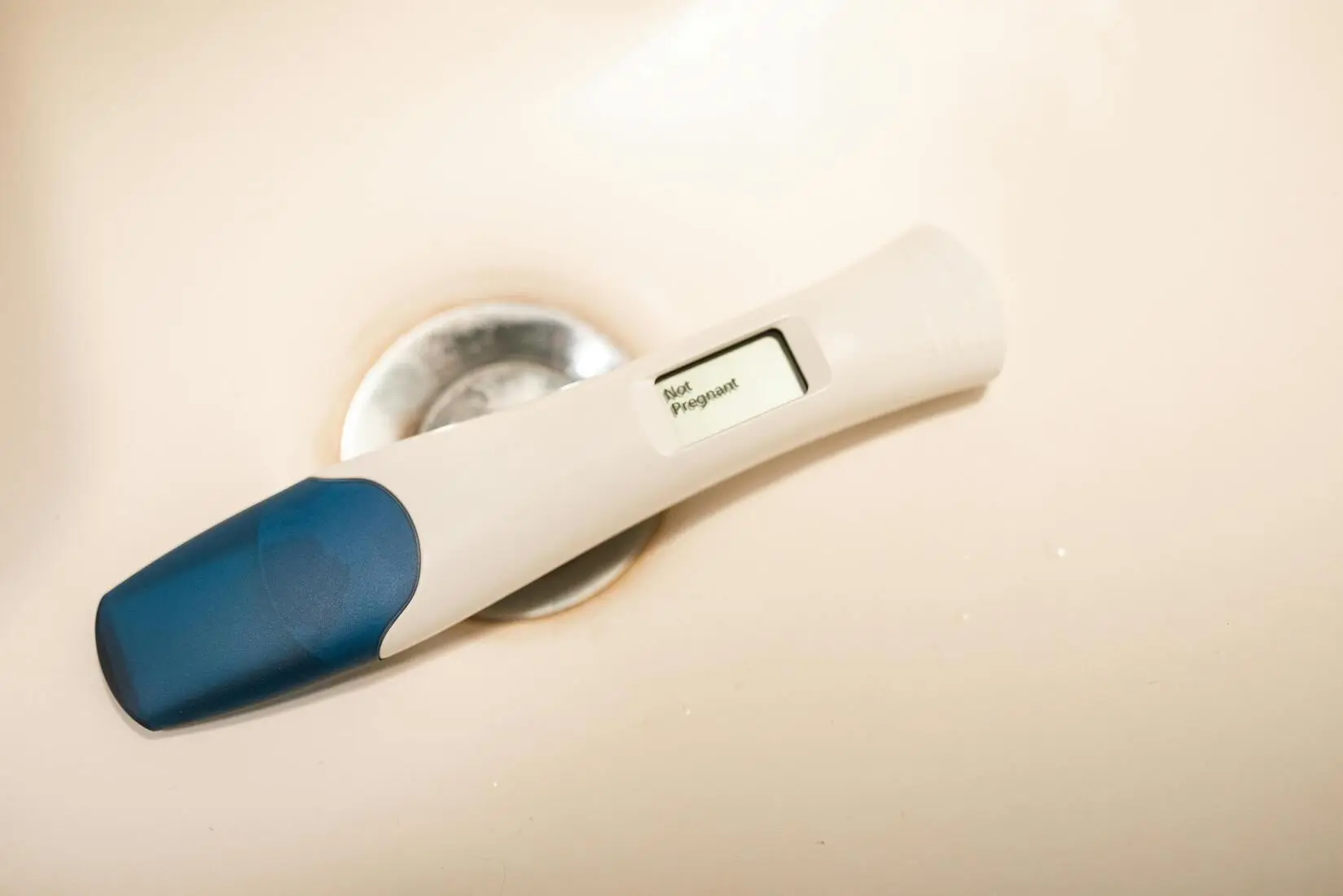
- 16 DPO and beyond, with no period: a negative is strong evidence. If your period still does not arrive within a week, it is worth a clinical blood test, which detects hCG at far lower levels.
One important exception: a negative test that stays negative for weeks after what felt like implantation bleeding deserves its own look. See negative pregnancy test weeks after implantation.
How to Get the Most Reliable Result
- Use first morning urine, especially before your missed period.
- Avoid drinking a lot of fluid in the hour or two before testing.
- Read the result inside the time window on the leaflet, usually 3 to 5 minutes. Lines that appear later can be evaporation lines, not positives.
- If the result is ambiguous, retest in 48 hours rather than the same day. hCG needs time to double.
- Check the expiry date, and store tests at room temperature.
If you are still in the trying-to-conceive stage, our ovulation and period calculator will pin down the fertile window this tool depends on, and guides on vitamin D and fertility and fertility teas cover the run-up.
Frequently Asked Questions
How many days past ovulation can I take a pregnancy test?
A standard 25 mIU/mL test reaches roughly 70% accuracy around 12 DPO and about 95% by 16 DPO. A sensitive 10 mIU/mL early-result test hits those milestones one to two days sooner. Testing before 9 DPO is usually too early, because hCG has not started rising yet in most pregnancies.
What does DPO mean?
DPO stands for days past ovulation. Ovulation day itself is 0 DPO, the next day is 1 DPO, and so on. It is a more useful clock than cycle day, because hCG production starts after implantation, which is timed from ovulation rather than from your last period.
Why does test sensitivity matter?
Sensitivity is the lowest hCG concentration a test can detect, printed in mIU/mL on the box. Early hCG roughly doubles every 24–48 hours, so a 10 mIU/mL test crosses its threshold about one to two days before a 25 mIU/mL test, and roughly two days before a 50 mIU/mL one.
Does first morning urine really make a difference?
Yes, especially when testing early. Urine concentrates overnight, so first morning urine carries more hCG per millilitre. This calculator shifts your accuracy curve back by about a day if you test later in the day.
Can I get a positive before my missed period?
Often yes. With a 14-day luteal phase, 12 DPO falls two days before a missed period, and a standard test is already around 70% accurate then. But a negative that early means very little, so retest on or after the day your period is due.
I tested negative on my earliest reliable date. Am I definitely not pregnant?
No. "Earliest reliable" here means the first day detection odds pass about 70%, which still leaves roughly a 1-in-3 chance of a false negative if you are pregnant. Late implantation, dilute urine, or ovulating later than you thought all push a positive later. Retest in 48 hours if your period has not arrived.
What if I do not know when I ovulated?
Switch the calculator to "Use my last period". It estimates ovulation as cycle length minus your luteal phase, which is the standard calendar method. Estimated ovulation dates carry a few days of uncertainty, so treat the resulting dates as a range rather than an exact day.