Ovulation & Period Calculator
Enter your last period and cycle details to see your upcoming fertile window, ovulation day, and period dates on a calendar.


| # | Event | Start date | End date |
|---|
How Ovulation Timing Actually Works
Ovulation typically occurs about 14 days before the start of your next period — not 14 days after your last one, which is a common misconception. For a 28-day cycle that lands on day 14; for a 30-day cycle, day 16. This calculator uses the luteal-phase formula (cycle length minus 14) because the second half of the menstrual cycle is more consistent between individuals than the first.
The result on your calendar is a best estimate, not a diagnosis. Real ovulation shifts month to month with stress, illness, sleep, exercise, and travel — one reason clinical confirmation of pregnancy uses a blood test or ultrasound rather than dates alone.
What Is the Fertile Window?
The fertile window is the 6-day span ending on the day of ovulation. Sperm can survive in the reproductive tract for up to 5 days, while an egg is only viable for roughly 12–24 hours after it's released. That asymmetry is why the highest chance of conceiving is before ovulation, not on ovulation day itself.
Research from the U.S. National Institute of Environmental Health Sciences puts peak conception probability at 1–2 days before ovulation. The green zone on your calendar highlights the full 6-day window so you can plan several days of overlap rather than trying to hit a single date.
When Is the Best Time to Take a Pregnancy Test?
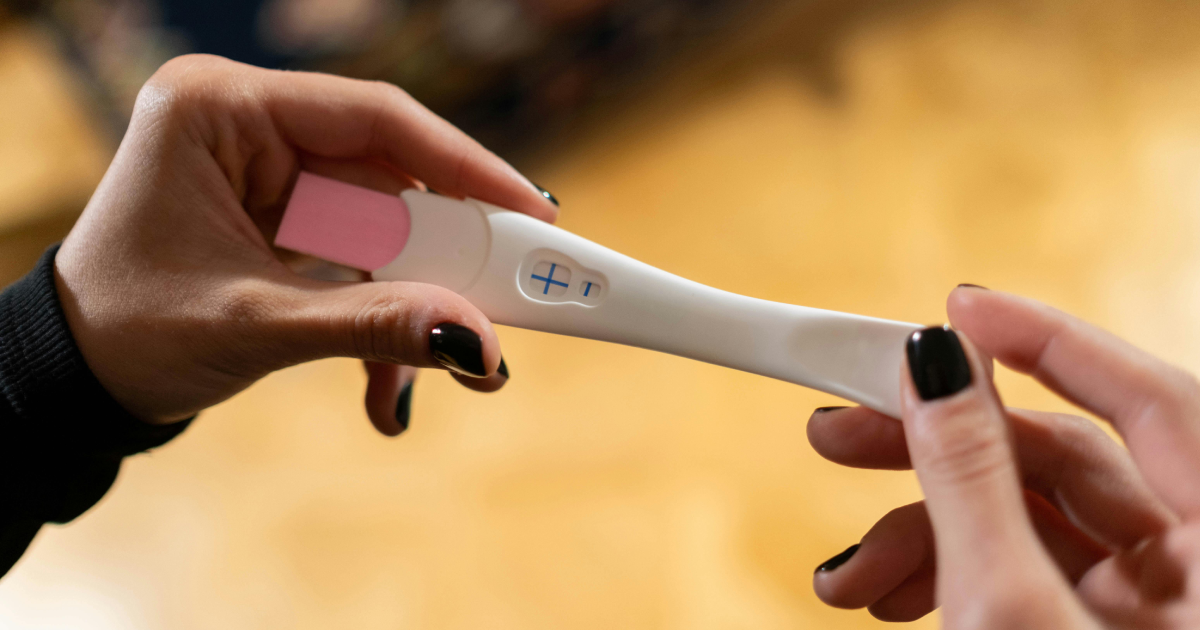
Once you know your ovulation day, our when can I take a pregnancy test calculator turns it into an exact earliest-reliable test date, with the odds of a positive for every day past ovulation. Home pregnancy tests detect the hormone hCG, which only starts rising after a fertilized egg implants — usually 6–12 days after ovulation. Most tests are marketed as reliable from the first day of a missed period. Testing earlier risks a false negative even during a real pregnancy, or a very faint line that's hard to read.
If you get a negative in the evening but suspect you might be pregnant, remember that first-morning urine has the highest hCG concentration — this is why some people see a negative test at night and a positive one in the morning. See our guide on testing 6 days before your period for more on early-detection timing. When you do test, our AI pregnancy test scanner can read the result from a photo.
How Accurate Is a Cycle Calculator?
A calculator is only as accurate as your cycle regularity. If your cycles vary by more than 7 days between periods, formula-based predictions can drift by several days. In that case, pair this tool with:
- Ovulation predictor kits (OPKs) — detect the LH surge 24–36 hours before ovulation.
- Basal body temperature (BBT) tracking — confirms ovulation after the fact via a small temperature rise.
- Cervical mucus observation — slippery, egg-white texture peaks just before ovulation.
Nutrition and supplementation also affect cycle regularity and egg health — see our guides on vitamin D and fertility and teas that support fertility, or read about conceiving naturally with endometriosis if you have a diagnosed condition.
Common Signs of Ovulation
- Slippery, stretchy, egg-white cervical mucus
- Mild one-sided pelvic ache ("mittelschmerz")
- Small basal temperature rise (~0.3–0.6 °F) the morning after ovulation
- Increased libido and energy in the days leading up to it
- Breast tenderness
- Light mid-cycle spotting in some people
Frequently Asked Questions
Can I use this ovulation calculator as birth control?
No. Even with regular cycles, ovulation shifts each month with stress, illness, or travel. Fertility awareness methods can be effective but require daily tracking of multiple signs (temperature, cervical mucus, LH), not just calendar math. Use dedicated contraception if pregnancy is not desired.
How soon after ovulation can I take a pregnancy test?
hCG starts rising after implantation, roughly 6–12 days after ovulation. Most home pregnancy tests are marketed as reliable from the first day of a missed period. Testing earlier risks a false negative even during a real pregnancy.
What if my cycles are irregular?
Calendar predictions become less reliable if your cycles vary by more than a week. Combine this calculator with basal body temperature tracking or ovulation predictor kits. If cycles are consistently outside the 21–35 day range, mention it to your doctor.
Does age affect ovulation timing?
Yes. Cycles often shorten slightly in the mid-30s and become more variable approaching perimenopause. Egg quality also declines gradually after age 32 and more sharply after 37.
Can stress delay ovulation?
Yes. High cortisol can suppress the LH surge that triggers ovulation, pushing it later in the cycle. Illness, travel, intense exercise, and significant weight change can have the same effect.
Is spotting between periods normal?
Light spotting around ovulation is common and usually harmless — some people also spot at implantation, 6–12 days after ovulation. Frequent or heavy mid-cycle bleeding warrants a medical check.